Mocap Marker Size Guide: Choosing 4–20 mm
Why diameter is a signal-to-noise decision
A marker is a few pixels of returned light. Too small and the centroid jitters or drops at distance; too large and it occludes neighbours, merges with adjacent markers, or snags on clothing. Diameter is chosen from camera distance and volume, not from habit.
Sizing table by working distance
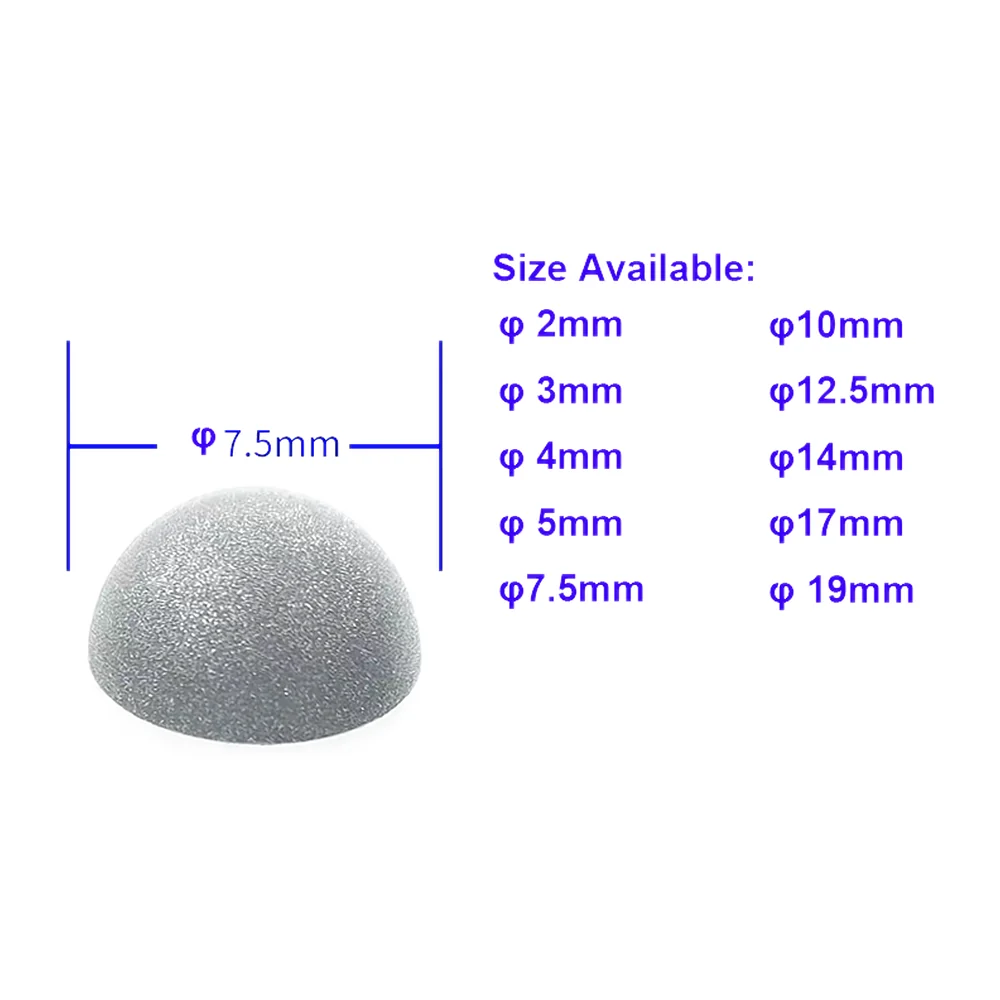
Use this as a starting ladder, then verify against your camera resolution and lens. Under 2 m (hands, face, small props): 2–5 mm hemispheres or 7.5 mm balls. 2–5 m (full body, studio): 10–14 mm. 5–10 m (large volume, stage): 14–19 mm. Beyond 10 m or outdoors: 19 mm.
Hemispheres change the rule
A hemisphere of diameter d returns like a ball of roughly d but sits flush, so on skin and shoes you can drop one size step versus a threaded ball. On rigid props keep balls: the stem keeps the sphere clear of the surface.
Stock the ladder, not one size
Labs and stages consume mixed sizes daily. Our packs (10–100 pcs) and 25/50/100-piece micro hemispheres exist so a full ladder costs less than one over-ordered size.
| Working distance | Ball Ø | Hemisphere Ø |
|---|---|---|
| Under 2 m | 7.5 mm | 2–5 mm |
| 2–5 m | 10–14 mm | 5–10 mm |
| 5–10 m | 14–19 mm | 10–14 mm |
| Over 10 m | 19 mm | 14–19 mm |
Related pages
Get a factory quote within 24 hours
Send sizes, threads and quantities — or just the scanner or tracking system you run. We answer with a specification match, MOQ and factory pricing.